
Bashir Habaibeh, fondly known as Haj Bashir, is from the agricultural village of Sanour in the northern West Bank, and is the chair of Palestine Fair Trade Association. He is 70 years old and the head of a large family – four sons, seven daughters, most of them now married, and 55 grandchildren – and he still works his land every day, much as his father and grandfather did before him.
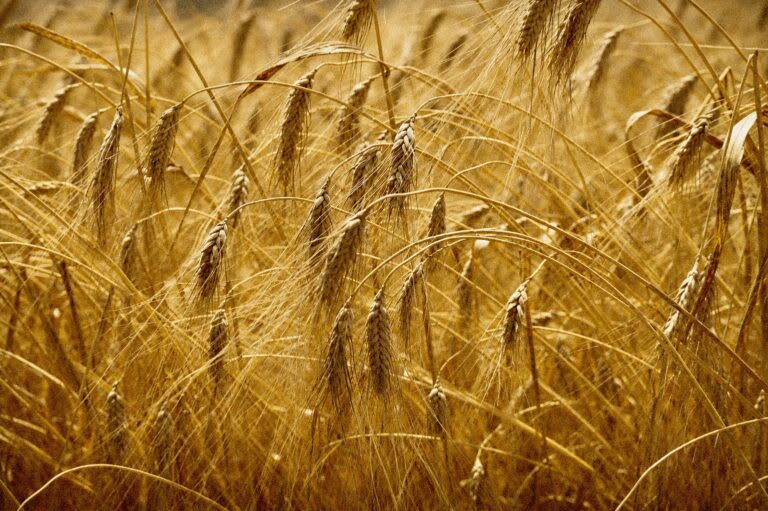
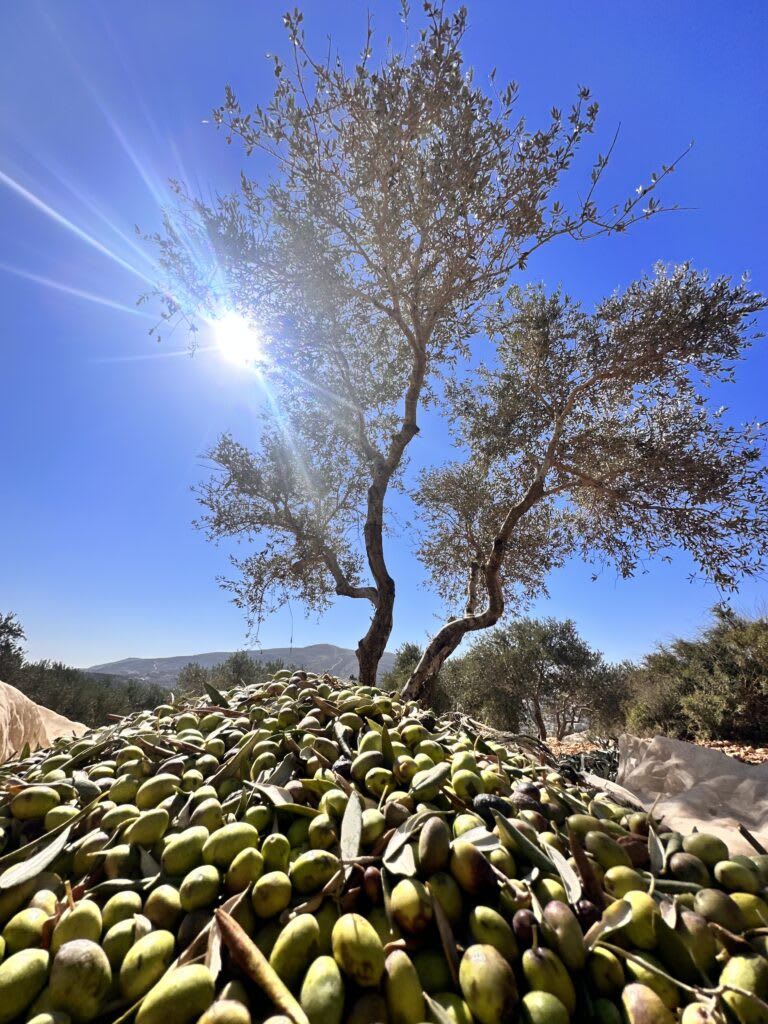
His farm covers around 65 dunums (about 6.5 hectares), most of it planted with olive trees, alongside wheat, aniseed, sesame, lentils, pumpkin and other field crops, grown as part of a traditional mixed-farming system. The land itself has been inherited from great-grandfather to grandson for roughly 200 years.
A lifetime of organic farming
For Haj Bashir, organic isn’t a certification scheme he adopted — it’s simply how farming has always been done. His olives, wheat and sesame have never been treated with chemical fertiliser, and all three now have a path to formal organic certification. Other crops, like aniseed, aren’t yet certifiable, partly because no local certification process exists for them yet.
“Organic is purely a clean product, free of chemical residues.”
He remembers his father fertilising the fields with manure and animal waste, long before chemical inputs arrived from the West and farmers began experimenting with them. He’s tried chemical treatments on some crops over the years, but for the ones that matter most — olive, wheat, sesame — he has kept faith with the traditional, ecological way of farming. He says you can taste the difference: olives grown and pressed without chemicals simply taste better.
Farming under occupation
Haj Bashir is candid about how hard farming has become. “Of course, it is difficult,” he says — there’s no comparing today with the past, though he thought that was challenging enough.
The nearest major market, Jenin, is only 15-20km away, but military closures and roadblocks routinely cut off access. He quotes a recent example when his children were harvesting pumpkins and tomatoes, the family simply couldn’t get the produce to market — it ended up as animal feed instead, at a financial loss, since the cost of growing it was higher than its value as feed. Durable products like olive oil and wheat can wait out these closures; perishable vegetables cannot.
New Israeli settlement projects planned around Sanour add another layer of threat, putting land his family has farmed for over 200 years at risk of confiscation. With no subsidies and no guaranteed market protections, Haj Bashir and other farmers have adapted by leaning on long-shelf-life products and a degree of semi-subsistence farming — growing some for the household, some for market, when the market is reachable.
At a glance
- Village: Sanour
- Location: 16km from Jenin. Northern West Bank, Palestine
- Farm size: ~65 dunums (approx. 6.5 hectares)
- Main crops: Olives, wheat, sesame, aniseed, lentils, pumpkin
- Certified organic: Olives, wheat, sesame (certification in progress/renewal)
- Land in family: Approximately 200 years
Reaching the outside world through Fair Trade
International buyers rarely deal directly with Palestinian farmers. For Haj Bashir, the route to global markets runs through Canaan Fair Trade, working with the Palestine Fair Trade Association (PFTA) — a connection he describes as one of the few ways farmers like him can reach beyond the walls, fences and checkpoints that surround their daily work.
It feels like farming inside a cage or prison… the Fair Trade supply chain serves both as lenses that see through walls, and oxygen to keep us breathing within them. It allows us to penetrate these walls and reach the outside world.
Even that connection has been tested. Ongoing instability has meant organic inspectors, who once visited annually, stopped coming altogether — and the farmer members of the PFTA lost their organic certification as a result. They had to change certifying bodies and start the process again from zero. He and his fellow farmers now anticipate the new round of certification being issued this month.
Water, drought and the fight to stay on the land
Access to water is one of the starkest daily hardships. Drinking water may arrive only once a week, not because Palestine lacks water — there are lakes and underground reserves — but because access is restricted to a quota over which farmers have no control. Farmers need permits to drill wells, and getting one is, in Haj Bashir’s words, “a miracle” that essentially never happens. Some farmers drill without permission anyway, out of necessity; when the wells are discovered, they’re destroyed — something that has happened repeatedly across the water-rich Sanour plain.
In response, development organisations have helped install rainwater harvesting systems — cisterns that collect water from rooftops for irrigation and drinking, now common across the village. The olive tree itself, resilient by nature, copes with drought better than most crops, which has become one more reason it remains central to how families here farm and survive.
Why he stays
Haj Bashir is open about the pressure he and his neighbours live under — pressure he believes is designed, in his words, to force people to leave their land. Generations have built up the stamina to withstand it. But he refuses to let go of hope: he calls losing it “forbidden,” not even an option, because he and his family know they are living a just cause — farming their own ancestral land, harming no one.
“We remain grounded in the knowledge that our cause is just…,” he says. ” Being on the land, continuing to cultivate it, and witnessing its productivity provides spiritual and emotional satisfaction. The connection between land, justice and identity is what keeps us going.”
That conviction — that this is simply his land, farmed justly — is where his strength comes from, and the hope he holds for his children and 55 grandchildren.
We will remain.
Updated July 2026
Other posts you’ll love